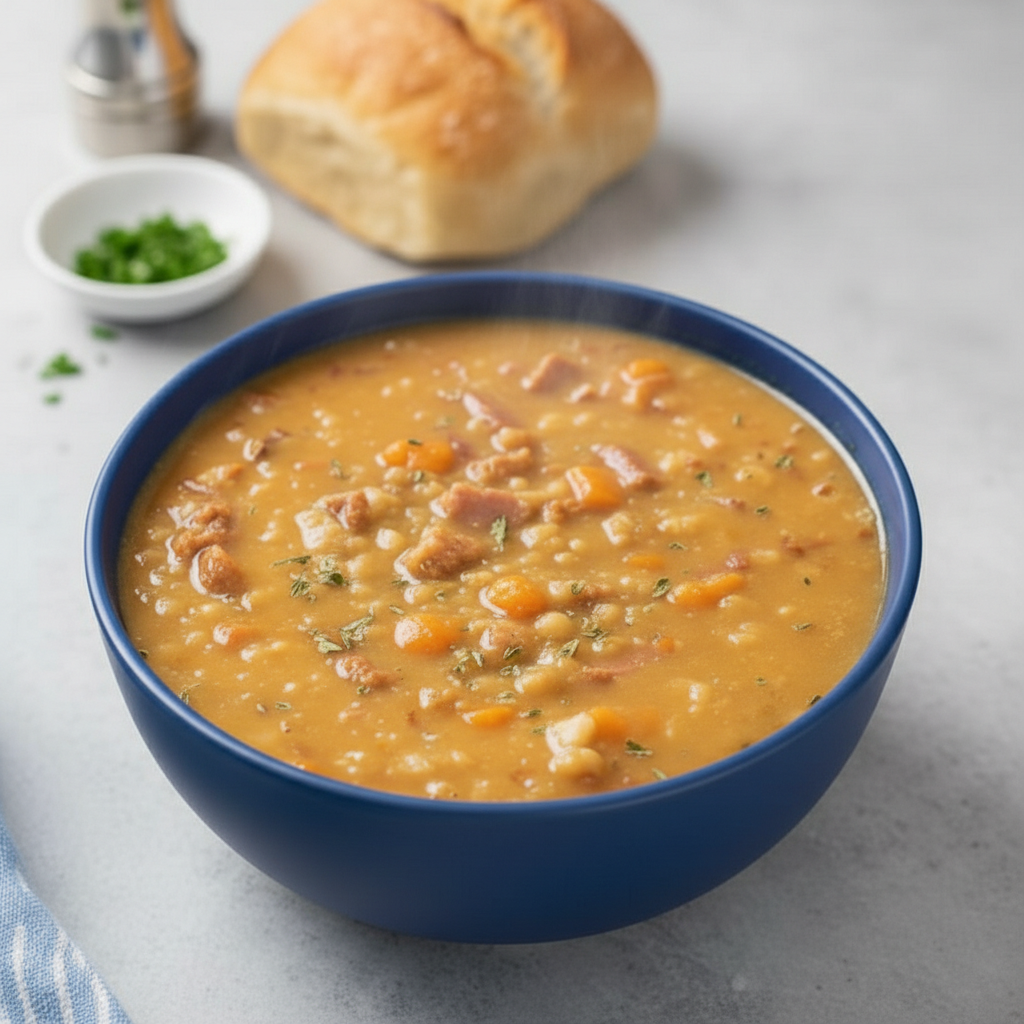
In the quiet rhythm of my home kitchen, where the aroma of simmering broth fills the air, ham and bean soup stands out as a dish that transforms humble leftovers into something profoundly nourishing. Drawing from years of experimenting with family favorites, this recipe captures the essence of slow-cooked goodness, with tender navy beans absorbing the smoky richness of ham and a medley of vegetables adding subtle sweetness. It is the kind of meal that warms you from the inside, perfect for those days when you crave simplicity and depth in every spoonful.
Why This Soup Deserves a Spot in Your Repertoire
As a home chef who loves turning everyday ingredients into memorable meals, I appreciate how this soup balances ease with flavor. It requires minimal hands-on time yet delivers a thick, satisfying broth that feels like it has been cooking all day. Using a ham bone infuses the pot with layers of savoriness that you just cannot get from store-bought stock. Plus, it is economical, making the most of what you have on hand, whether from a holiday ham or a simple purchase at the market. Over the years, I have tweaked it to suit different cooking methods, ensuring it fits into busy schedules without losing its soulful appeal.
This dish also shines in its versatility. You can prepare it on the stovetop for that classic slow-simmer experience, or opt for a slow cooker to let it develop flavors while you go about your day. For quicker results, the Instant Pot version cuts down the time significantly, yet still yields beans that are creamy and soft. Nutritionally, it packs protein from the beans and ham, along with vitamins from the carrots and onions, making it a wholesome choice for family dinners or meal prep.
Gathering Your Ingredients
Before diving into the cooking, let’s talk about what you will need. I always start by selecting quality items, as they make all the difference in the final taste. Here is a breakdown of the essentials, rephrased for clarity and grouped to help you shop or prep efficiently.
Base Aromatics and Fats
A couple of tablespoons of olive oil for sautéing.
One tablespoon of unsalted butter to add a touch of richness.
A small yellow onion, finely diced for that foundational flavor.
Two cloves of garlic, minced to bring a subtle sharpness.
Proteins and Legumes
Around two cups of diced ham, which could come from ham steaks or leftovers.
One pound of dried navy beans, thoroughly rinsed under cool water.
A meaty ham bone to impart deep, smoky notes during simmering.
Vegetables and Liquids
Two cups of carrots, cut into small dice for even cooking.
Four cups of chicken broth to build the savory base.
An equal amount of water, four cups, to dilute and expand the broth.
Seasonings and Herbs
Two teaspoons of onion powder for an extra layer of allium essence.
One bay leaf to infuse herbal undertones.
Two fresh sprigs of thyme for aromatic freshness.
These quantities serve about eight to ten people, depending on portion sizes. If you are missing the ham bone, consider a smoked ham hock or shank as a substitute, as it provides similar depth. For beans, navy are my go-to for their creamy texture, but great northern or pinto could work in a pinch, though they might need a bit more time to soften.
Preparing Your Kitchen Setup
As someone who cooks this often, I recommend getting everything chopped and measured before starting. This mise en place approach keeps things smooth. Rinse the beans well to remove any debris, but skip soaking them overnight. In my experience, it does not drastically change the outcome, and starting fresh saves time. If using a ham bone, ensure it is meaty for the best results, bits of ham will naturally fall into the soup as it cooks.
For equipment, a large soup pot or Dutch oven is ideal for the stovetop method. If going slow cooker, aim for at least five quarts. The Instant Pot needs no introduction for pressure cooking fans. Keep a wooden spoon handy for stirring, and have tongs ready to remove the bone later.

Step-by-Step Cooking Guide
Now, let’s get to the heart of making this soup. I will detail the stovetop method first, as it is my preferred way to monitor the progress and adjust as needed. Then, I will cover adaptations for slow cooker and Instant Pot. Each step builds on the last, creating that thick, flavorful consistency we all love.
Stovetop Method: Building Flavors Layer by Layer
Initial Rinse and Prep
Begin with the beans. Give them a thorough rinse in a colander under cold running water. Set them aside to drain while you prepare the rest.
Sauté the Aromatics
Place your large soup pot over medium heat. Add the olive oil and butter, letting the butter melt completely. Toss in the diced onion and cook it gently for about five minutes, until it turns soft and starts to become translucent. This step releases the onion’s natural sweetness, setting a solid foundation.
Incorporate Vegetables and Ham
Stir in the diced carrots, ham pieces, and minced garlic. Continue cooking for just one more minute, stirring frequently to avoid burning the garlic. The ham will begin to brown slightly, adding a caramelized note. If you prefer firmer carrots, hold them back and add during the last forty to forty-five minutes of simmering.
Add Liquids and Seasonings
Pour in the chicken broth and water. Drop in the ham bone, followed by the rinsed navy beans, onion powder, bay leaf, and thyme sprigs. Increase the heat to bring everything to a rolling boil. Once boiling, reduce the heat to low for a gentle simmer. Partially cover the pot with a lid, leaving a small gap for steam to escape.
Simmer to Perfection
Allow the soup to simmer for at least three hours. The longer it goes, the thicker it becomes as the beans break down naturally. Stir occasionally to prevent the beans from sticking to the bottom. You will notice the broth thickening and the beans softening to a creamy texture. Taste midway and adjust if needed, but hold off on extra salt until the end, as the ham contributes plenty.
Final Touches and Serving
When the soup reaches your desired thickness, remove it from the heat. Carefully fish out the ham bone, bay leaf, and any remaining thyme stems. If the bone has meat left, shred it and stir back in. Give the soup a final stir. If it seems too thick, thin it with a splash of water or broth. Ladle into bowls and enjoy hot.
This method yields about thirteen cups, perfect for a crowd or leftovers.
Slow Cooker Adaptation: Hands-Off Convenience
For days when I want to set it and forget it, the slow cooker is a lifesaver.
Assembly
Rinse the beans as before. Add all ingredients directly to a large slow cooker, at least five quarts in size: olive oil, butter, onion, ham, carrots, garlic, broth, water, ham bone, beans, onion powder, bay leaf, and thyme.
Cooking
Set to high and cook for six hours or more, until the beans are tender and the soup has thickened. No need to sauté first, the slow heat melds everything beautifully.
Finishing
Remove the ham bone, bay leaf, and thyme stems. Stir well and serve.
Instant Pot Version: Quick and Efficient
When time is short, I turn to the Instant Pot for pressure-cooked magic.
Sauté Start
Rinse beans. Set the pot to sauté mode. Add olive oil and butter, then cook the onion for five minutes until soft. Add ham, garlic, and cook one minute.
Pressure Cook
Stir in remaining ingredients: carrots, broth, water, ham bone, beans, onion powder, bay leaf, thyme. Cancel sauté, secure the lid, and pressure cook on high for forty-five minutes.
Release and Serve
Allow a natural release for ten minutes, then quick release the rest. Remove bone, bay leaf, thyme. Stir and enjoy.
Ham and Bean Soup
Ingredients
Equipment
Method
- Rinse the navy beans thoroughly in a colander under cold water and set them aside to drain.
- Heat a large soup pot over medium heat, add the olive oil and butter, and let the butter melt.
- Add the diced onion to the pot and cook for about 5 minutes until it softens and becomes translucent, stirring occasionally.
- Stir in the diced ham, minced garlic, and diced carrots, cooking for 1 more minute while stirring to prevent the garlic from burning.
- Pour in the chicken broth and water, then add the ham bone, rinsed beans, onion powder, bay leaf, and thyme sprigs.
- Bring the mixture to a boil over high heat, then reduce to low for a gentle simmer, partially covering the pot.
- Let it simmer for at least 3 hours, stirring occasionally, until the beans are soft and the soup thickens.
- Remove the pot from heat, take out the ham bone, bay leaf, and thyme stems; shred any remaining meat from the bone and stir it back in.
- If the soup is too thick, add a bit more water or broth to reach your preferred consistency, then stir well before serving hot.
- For slow cooker: Combine all ingredients in a 5-quart or larger slow cooker, set to high, and cook for 6 hours or until beans are tender; finish as in step 8.
- For Instant Pot: Use sauté mode for steps 2-4, add remaining ingredients, pressure cook on high for 45 minutes with natural release for 10 minutes, then quick release; finish as in step 8.
Notes
Tips from My Kitchen Experience
Over countless batches, I have learned a few tricks. If your beans are old, they might take longer to soften, so buy fresh when possible. For a thicker soup without extra effort, mash a portion of the beans against the pot side near the end. Avoid adding acidic ingredients early, as they can toughen the beans.
If substituting the ham bone, a ham hock works wonders, or use extra broth for a vegetarian twist, though it changes the character. Carrots can be added later for crunch. And always taste for seasoning at the end, ham varies in saltiness.
Variations to Suit Your Taste
While I stick close to the classics, there is room to play. Some add diced celery for extra veg, or a pinch of red pepper flakes for heat. If using canned beans, drain and rinse three fifteen-ounce cans, adding them in the last thirty minutes to avoid mushiness, but note the broth will not thicken as much. For a heartier version, stir in chopped kale or spinach at the end for greens.
In my kitchen, I sometimes experiment with different herbs, like rosemary instead of thyme, or add a splash of vinegar for brightness. If you prefer other beans, pinto take longer but offer a nuttier flavor.
Storing and Reheating for Later Enjoyment
This soup stores beautifully, a bonus for meal planning. Cool it completely, then transfer to airtight containers. It keeps in the fridge for three to five days. For freezing, portion into freezer-safe bags or containers, leaving room for expansion, and freeze up to three months.
To reheat, thaw in the fridge overnight if frozen, then warm on the stove over low heat, adding water if needed to loosen. Microwave in short bursts, stirring between. It often tastes even better the next day, as flavors deepen.
Pairing Suggestions and Nutritional Insights
Serve with crusty bread or cornbread to sop up the broth. A simple green salad balances the richness. For nutrition, each serving offers around twenty grams of protein, fiber from beans, and vitamins A and C from carrots. It is low in fat if you trim the ham well, making it a balanced option.
The History and Appeal of Ham and Bean Soup
This soup has roots in American home cooking, evolving from European peasant dishes where beans stretched meat. In my family, it was a post-holiday staple, using every bit of the ham. Today, it represents resourcefulness and comfort, a reminder that great food comes from simple beginnings.

Hi, I’m Josie Erin. At TheRecipeBites, I turn simple, everyday ingredients into flavorful bites that make every meal memorable. I believe great food doesn’t have to be complicated it just needs the right balance of flavor, creativity, and love. From quick weeknight dinners to sweet treats worth sharing, I’m here to help you cook with confidence and enjoy every bite.