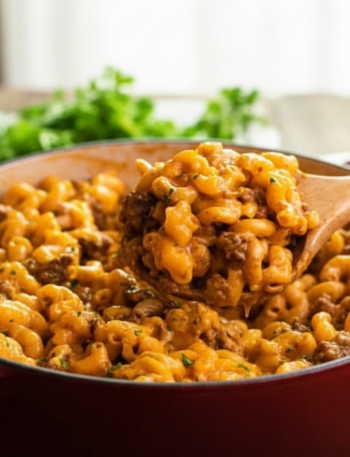
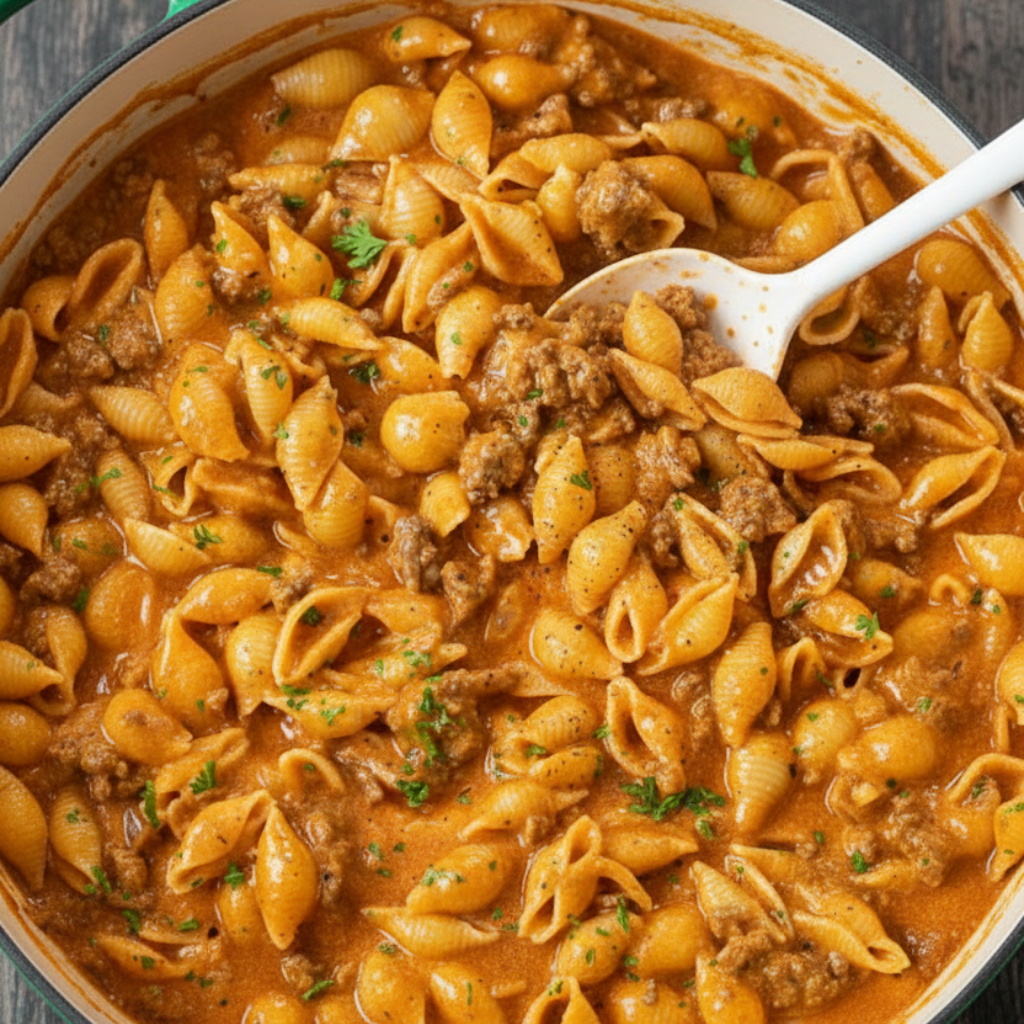
There are weeknight dinners that you make because you have to, and then there are weeknight dinners that you actually look forward to. This creamy beef and shells recipe falls firmly in the second category. It is the kind of meal that makes the whole house smell incredible by the time it is ready, and it consistently disappears from the pan faster than almost anything else I make.
The first time I pulled this together on a Tuesday night with nothing more than ground beef, a half-used can of tomato sauce, and some pasta shells, I did not expect much. What landed on the table was genuinely one of the most satisfying pasta dishes to come out of my kitchen. That combination of a rich tomato base, melty cheddar, and cream cheese stirred into the sauce is something you will not forget after the first bite.
Why This Dish Works So Well
The Sauce Is Built in Layers
A lot of creamy pasta sauces are just that: cream with some seasoning tossed in at the end. This one is different because the flavor is built up in stages, starting with properly browned beef and onions, then aromatics, then a whole lineup of pantry ingredients that each contribute something to the final result.
Hot sauce does not make this spicy. What it does is lift and sharpen all the other flavors in the sauce so nothing tastes flat. Worcestershire sauce adds depth and a faint savory sweetness. Mustard powder is subtle but gives the tomato base a slightly sharper, more complex edge. None of these are bold, obvious flavors on their own, but together they make the sauce taste like something that has been simmering for far longer than it actually has.
Cream Cheese Changes Everything
The small amount of cream cheese added to the sauce might seem unnecessary, but it does something no other ingredient replicates: it gives the sauce a silky, almost velvety body while adding just a hint of tang that keeps the richness from becoming heavy. It should be softened before going in so it melts into the sauce smoothly without leaving any lumps.
The half and half added at the end is what transforms the whole thing from a tomato pasta into a genuinely creamy dish. Adding it off the heat prevents it from breaking or curdling and keeps the sauce looking and tasting exactly as it should.
Choosing Your Ingredients
Ground Beef
For this recipe, 85% lean ground beef is the right choice. It has enough fat to stay moist and flavourful through the cooking process without releasing so much grease that you are left struggling to drain the pan. Leaner beef tends to go dry and a little grainy in a sauce like this. If you only have 90% lean on hand it will still work, but the sauce will be slightly less rich.
The Pasta
Medium shell pasta is the obvious choice here, and for good reason. The shells act like little cups and scoop up the sauce as you eat, which means every bite has a proper ratio of pasta to beef to cream sauce. That said, rotini, fusilli, and farfalle all work beautifully with this sauce. All of them have enough surface area and texture to hold onto the thick, clingy sauce rather than letting it slide off.
Shredding Your Own Cheese
This is one of those steps that feels like extra effort but genuinely makes a difference. Pre-shredded bagged cheese is coated with cellulose and anti-caking agents that prevent it from melting smoothly. When you add it to a hot sauce, it can turn grainy or clump rather than melt into that glossy, even finish you are after. Block cheddar, shredded on a box grater right before using, melts cleanly and tastes noticeably better. Sharp yellow cheddar is ideal here because its bite balances the richness of the cream cheese and half and half.
Before You Start Cooking
A Few Things Worth Doing First
Set yourself up before anything hits the pan. Shred the cheese, measure out your liquids, soften the cream cheese by leaving it at room temperature for twenty minutes, and get your pasta water heating. This recipe moves through its stages fairly quickly once the beef is in the skillet, and having everything ready means you will not find yourself scrambling mid-sauce to track down the Worcestershire sauce or realize you forgot to soften the cream cheese.
Season the ground beef generously with salt and pepper before it goes into the pan. Seasoning the meat itself rather than just the sauce later on makes a real difference to the depth of flavor in the finished dish.
Building the Sauce Step by Step
Browning the Beef and Onions
Get a large, deep skillet properly hot over medium-high heat before the beef goes in. If the pan is not hot enough, the meat will steam rather than brown, and you will lose the fond that forms on the bottom of the pan, which is some of the best flavor in the dish. Cook and crumble the beef for about four minutes, then add the diced onion and cook everything together for another five minutes until the onion has softened and the beef is fully cooked through.
Drain off any excess grease at this point. Leaving too much in will make the finished sauce greasy rather than creamy.
Layering the Seasoning
Once the garlic goes in and cooks for about a minute, add the hot sauce, Worcestershire sauce, Italian seasoning, mustard powder, red pepper flakes if you are using them, and flour. Cook this together for a minute or two. The flour is optional but recommended because it coats the beef and helps the sauce thicken to a proper consistency rather than staying thin and watery.
Deglazing and Finishing the Base
Add the beef broth and use a silicone spatula to scrape up everything stuck to the bottom of the pan. Those browned bits are concentrated flavor and they dissolve into the liquid to become part of the sauce. Add the tomato sauce and tomato paste, then add the softened cream cheese. Let the whole thing simmer while your shells cook.
Adding the Cream and Cheese
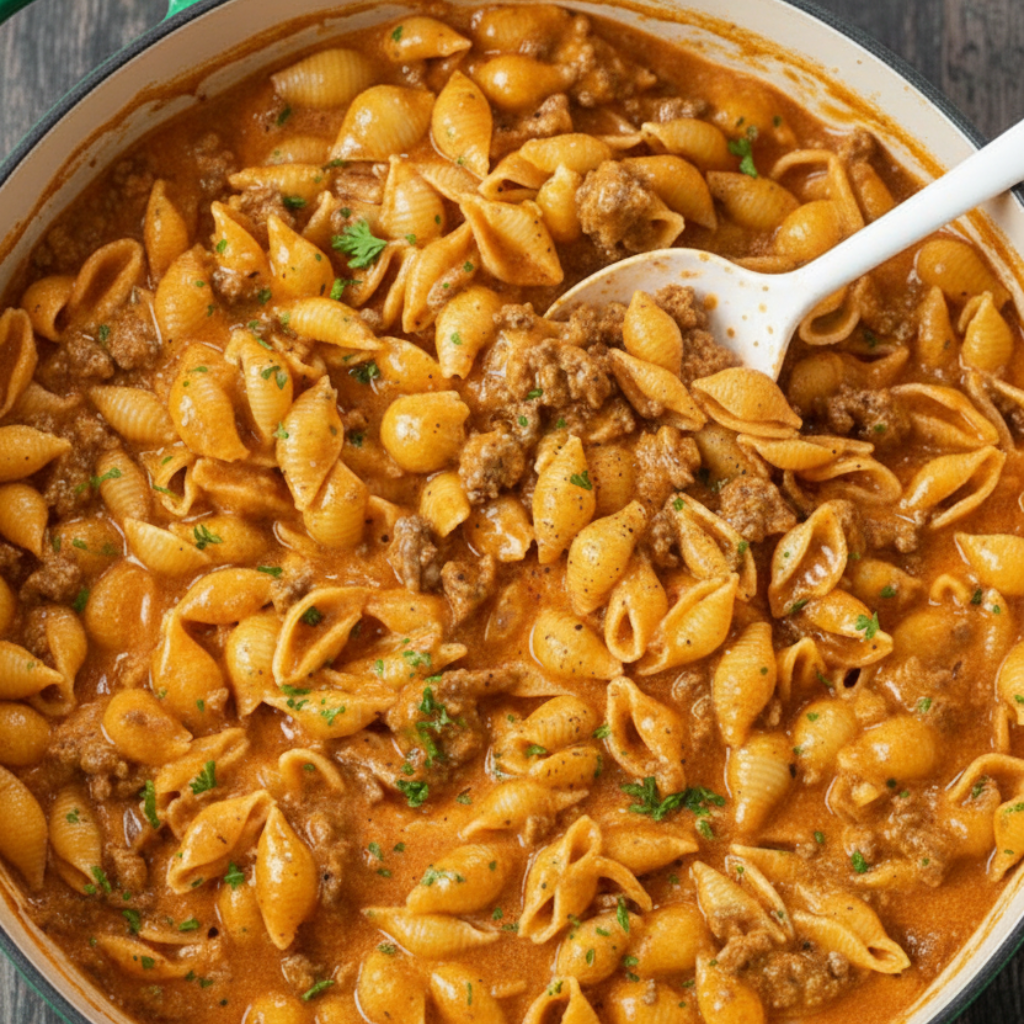
Once the shells are done, reduce the heat to low, stir in the half and half, then take the pan off the heat completely before adding the shredded cheddar. Adding cheese to a pan that is still on high heat is a fast way to end up with a grainy sauce. Off the heat, stir the cheese in gradually, letting each addition melt before adding more. Once it is smooth, add the drained pasta and fold everything together.
Creamy Beef and Shells Recipe
Ingredients
Equipment
Method
- Before You Begin Shred the cheddar from a block and set aside. Measure out all ingredients and leave the cream cheese at room temperature to soften. Start heating a large pot of salted water for the pasta.
- Cook the Beef Season the ground beef with salt and pepper. Heat a large deep skillet over medium-high heat and add the beef. Cook and crumble for about 4 minutes, then add the diced onion and continue cooking for another 5 minutes until the onion is softened and the beef is fully cooked through. Drain excess grease from the pan.
- Add Garlic Add the minced garlic and cook, stirring, for 1 minute until fragrant.
- Build the Seasoning Add the hot sauce, Worcestershire sauce, Italian seasoning, mustard powder, red pepper flakes, and flour. Stir to coat the beef and cook for 1 to 2 minutes.
- Deglaze and Simmer Add the beef broth and use a silicone spatula to scrape up any browned bits from the bottom of the pan. Stir in the tomato sauce, tomato paste, and softened cream cheese. Let the sauce simmer over medium heat while you cook the pasta shells according to package directions, about 7 to 8 minutes, until al dente.
- Finish the Sauce Reduce the heat to low and stir in the half and half. Remove the pan from the heat completely. Gradually stir in the shredded cheddar in small amounts, letting each addition melt before adding more, until the sauce is smooth and glossy.
- Combine Drain the pasta and add it to the skillet. Fold everything together until the shells are evenly coated in the sauce. Taste and adjust seasoning as needed.
- Serve Garnish with fresh parsley and freshly grated Parmesan. Serve immediately with garlic bread on the side.
Notes
- Always shred cheese from a block. Pre-shredded bagged cheese contains cellulose that prevents smooth melting and can make the sauce grainy.
- The hot sauce does not make this dish spicy. It enhances the overall depth of all the other flavors. Texas Pete is a good option.
- Mustard powder and tomato paste can be left out if needed, but both add subtle complexity and the paste also helps thicken the sauce.
- If the sauce is too thick after adding the pasta, stir in a splash of warm beef broth or a little extra half and half over low heat until loosened.
- Other pasta shapes that work well include rotini, fusilli, and farfalle.
- Refrigerate leftovers in an airtight container for up to 3 days. Reheat gently with a small splash of liquid added to restore the consistency.
- Freeze in portioned containers for up to 3 months. Thaw overnight in the fridge before reheating slowly on the stovetop.
Common Questions and Troubleshooting
What If the Sauce Is Too Thick
If the sauce thickens up more than you like, either from sitting or from the starch released by the pasta, just add a splash of warm beef broth or a little extra half and half and stir it through. It will loosen back up quickly without thinning the flavor.
What If the Sauce Looks Oily or Separated
This usually happens if the cheese is added while the pan is still too hot, or if it is added all at once. Take the pan off the heat and let it cool slightly, then stir in the cheese slowly in small amounts. Bagged pre-shredded cheese can also cause this because of its coating, so block cheese really is worth the extra couple of minutes.
Can the Pasta Be Cooked Directly in the Sauce
You can, but you will need to add more liquid and watch the starch levels carefully. The pasta absorbs a lot of the liquid as it cooks and releases starch, which changes the consistency of the sauce significantly. Cooking the shells separately and adding them at the end gives you more control over the final texture of both the pasta and the sauce.
Ways to Switch It Up
Meat Alternatives
Ground Italian sausage works wonderfully here and adds a slightly spiced, herby flavor that pairs well with the tomato base. A mix of half ground beef and half sausage is worth trying if you want something with a little more character. Ground turkey is a leaner option that works fine, though the sauce will be slightly less rich.
Adding Vegetables
A handful of fresh baby spinach stirred in right before serving wilts gently in the residual heat and adds color and a little nutrition without changing the flavor significantly. Finely diced bell pepper added alongside the onion is another easy addition. Mushrooms, sliced and cooked down before the beef goes in, add an earthy depth that pairs well with the tomato and cheddar.
Making It Spicier
If you want genuine heat rather than just the background warmth the hot sauce provides, increase the red pepper flakes or add a pinch of cayenne along with the other seasonings. A chipotle pepper in adobo sauce stirred into the tomato base adds heat with a smoky undertone that works particularly well with the cheddar.
What to Serve Alongside
This is a rich, complete dish on its own, but a side of garlic bread is the natural pairing. Something crunchy cuts through the creaminess and gives you something to sweep through any sauce left in the bowl. A simple green salad with a sharp, acidic dressing is another good option for the same reason. The acidity in a good vinaigrette balances the richness of the pasta without competing with the flavor.
A little freshly grated Parmesan over the top when serving is worth doing. It adds a salty, nutty layer that sharpens everything up at the end.
Storing and Reheating
Refrigerator
This keeps well in an airtight container in the refrigerator for up to three days. The pasta will continue to absorb liquid as it sits, so the leftovers will be thicker than the freshly made version. When reheating, add a small splash of broth or water to the pan over low heat and stir gently until it is warmed through and the consistency is back to where you want it.
Freezer
For longer storage, this freezes well for up to three months. Portion it into freezer-safe containers and thaw overnight in the refrigerator before reheating gently on the stovetop. Cream-based sauces can sometimes look slightly separated after freezing, but gentle reheating with a little added liquid and steady stirring usually brings it back together well.

Hi, I’m Josie Erin. At TheRecipeBites, I turn simple, everyday ingredients into flavorful bites that make every meal memorable. I believe great food doesn’t have to be complicated it just needs the right balance of flavor, creativity, and love. From quick weeknight dinners to sweet treats worth sharing, I’m here to help you cook with confidence and enjoy every bite.