The first real cold snap hit last week, the kind that turns your breath white at the mailbox, and I did what I always do: I bought a chuck roast. There is something about the first frost that makes a person need beef stew. Not want. Need.
This slow cooker beef stew is the one I have been refining for the better part of a decade. It started as my dad’s Sunday stew, the kind he made in a battered Dutch oven while football played in the background, and I have spent years translating it to the slow cooker without losing what made his version great. The gravy is rich, the beef falls apart, and the vegetables hold their shape instead of dissolving into mush.
Scroll down for the printable recipe card once you have read through the tips. There are a few small decisions in this recipe that make an outsized difference, and I want you to get them right the first time.
What Makes This Slow Cooker Beef Stew Different
Most slow cooker beef stew recipes treat the slow cooker like a dump-and-go machine and the beef like an afterthought. This one does not. The beef gets seasoned aggressively, seared hard for real color, and then it braises for eight hours in a broth that is built in layers: tomato paste, Worcestershire, thyme, and a bay leaf that comes out at the end.
The gravy is the whole point of this stew, and it thickens itself. A light coating of flour on the beef before searing does double duty: it helps the browning and it dissolves into the broth as it cooks, giving you a gravy that coats the spoon without a single lumpy slurry at the end.
The Beef Question: Chuck Roast, Always
Buy chuck roast. Not stew meat, not round, not whatever is on sale with a vague label. Chuck has the fat and connective tissue that break down over long cooking into unctuous, spoon-tender bites. Lean cuts like round just dry out, no matter how long you cook them.
And here is my strong opinion on pre-cut stew meat: skip it. Those packages are a mix of random trimmings, some tender and some tough, and they cook unevenly. Buy a whole chuck roast and cut it yourself into 1.5-inch cubes. It takes five minutes and the difference is night and day.
Cut the cubes big. Beef shrinks as it cooks, and those neat 1-inch cubes you started with will be sad little pebbles by dinner. Go 1.5 inches, even 2, and you will have proper hearty chunks.
To Sear or Not to Sear
Okay, let us address the elephant in the kitchen. Searing the beef before it goes in the slow cooker adds a step and dirties a pan, and half the internet will tell you to skip it. I have tested this side by side, same beef, same broth, one batch seared and one not.
The seared batch won by a mile. Deeper color, richer gravy, beef that actually tastes like beef instead of boiled meat. The unseared batch was fine, but fine is not what we are cooking for.
That said, if you are truly out of time, skip the sear and add an extra spoonful of tomato paste. You will get about 80 percent of the way there. But when I have ten spare minutes, I always sear. It is the single highest-impact step in the whole recipe.
The Supporting Cast
Carrots, celery, onion, and potatoes go in with the beef, cut chunky so they survive the long cook. I use baby potatoes halved, or russets cut into big pieces. Anything smaller turns to starch soup by hour eight.
Frozen peas get stirred in at the very end, off the heat. They just need the residual warmth to thaw, and they stay bright green and sweet instead of turning army-olive. This is one of those tiny details that makes the bowl look alive.
Garlic goes in with the sear, tomato paste gets cooked for a minute until it darkens (raw tomato paste tastes tinny; cooked tomato paste tastes like depth), and the Worcestershire brings the savory background hum. A teaspoon of sugar sounds strange but it rounds out the tomato’s edge.
Mistakes That Ruin Beef Stew
I have made all of these so you do not have to. Too much liquid is the big one: the beef and vegetables release a shocking amount of juice, so start with less broth than feels right. You can always thin at the end; you cannot easily fix a watery stew.
Second: lifting the lid. Every peek costs you 20 to 30 minutes of heat. Trust the process and leave it alone. Third: adding the potatoes too small or too early. They should be big chunks, and if your slow cooker runs hot, they can even go in halfway through.
And please, salt in layers, not just at the end. Season the beef before searing, season the vegetables as they go in, and adjust at the finish. Layered seasoning tastes like depth; end-only seasoning tastes like salt on top of bland.
Serving, Storing, and the Day-Two Miracle
Serve it in deep bowls with crusty bread, obviously. But I want to talk about day two, because this stew is one of those rare dishes that improves overnight. The gravy settles, the flavors marry, and the beef gets even more tender. I deliberately make extra now.
It keeps 4 days in the fridge and freezes beautifully for 3 months. Thaw overnight, reheat gently, and add a splash of broth if the gravy thickened too much. The potatoes can go a little soft after freezing, so if you are a planner, freeze the stew before adding potatoes and cook fresh ones in when you reheat. That is the pro move.
Slow Cooker Beef Stew FAQs
Can I cook this on HIGH? Yes, 4 to 5 hours on HIGH works, but LOW for 7 to 8 hours gives you more tender beef and a silkier gravy. If you have the time, take it.
My gravy is too thin. Now what? Mash a few potato chunks against the side of the pot and stir, or simmer uncovered on HIGH for 30 minutes. As a last resort, a cornstarch slurry (1 tablespoon cornstarch whisked into 2 tablespoons cold water) stirred in at the end works fine.
How do I get deep flavor without any fancy additions? You do not need anything beyond what is listed. The tomato paste, Worcestershire sauce, and a proper sear on the beef give you all the savory depth this stew needs.
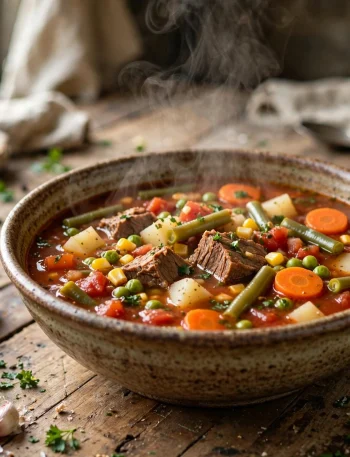
If hearty slow cooker meals are your thing, this crockpot vegetable beef soup is the lighter weeknight cousin, and my slow cooker chicken noodle soup is the comfort classic for when you want poultry instead of beef.
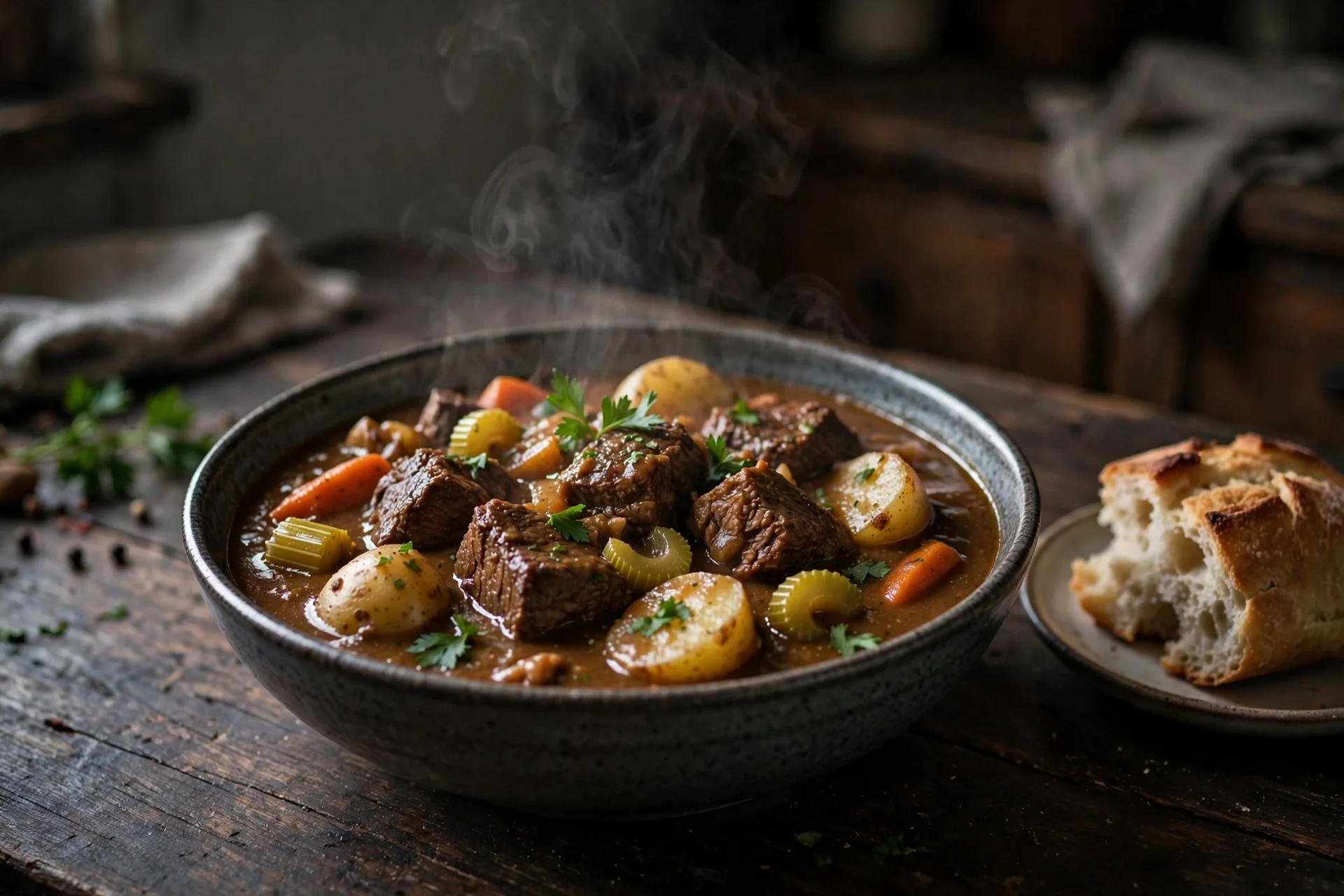
Slow Cooker Beef Stew
Ingredients
Equipment
Method
- Pat the beef cubes dry with paper towels. Toss with the flour, 1 teaspoon of the salt, and the black pepper until lightly coated.
- Heat the olive oil in a large skillet over medium-high heat. Sear the beef in batches until deeply browned on at least two sides, about 2 to 3 minutes per side. Transfer to the slow cooker. Do not crowd the pan.
- In the same skillet, add the onion and cook 3 minutes. Add the garlic and tomato paste and cook 1 minute more, until the paste darkens. Pour in a splash of the beef broth and scrape up all the browned bits.
- Add the carrots, celery, and potatoes to the slow cooker. Pour in the remaining broth, the Worcestershire sauce, sugar, thyme, bay leaves, and the remaining 0.5 teaspoon salt. Stir gently.
- Cover and cook on LOW for 7 to 8 hours (or HIGH for 4 to 5 hours), until the beef is fall-apart tender. Do not lift the lid during cooking.
- Discard the bay leaves. Stir in the frozen peas and let stand 5 minutes. Taste and adjust salt. Ladle into bowls and top with fresh parsley.
Notes

Hi, I’m Josie Erin. At TheRecipeBites, I turn simple ingredients into flavorful bites that make every meal memorable.