I have a confession to make about slow cooker beef tips and gravy. For years I made it the lazy way. I dumped raw beef cubes into the crockpot, poured broth over the top, walked away, and called it dinner. It was fine. It was edible. Nobody complained. But it was never the kind of meal anyone asked for twice.
Then one Saturday I had twenty spare minutes and a hot skillet, and I seared the beef before it went in. Same cut, same broth, same crockpot. The difference was honestly embarrassing. The gravy was deeper, the beef tasted like beef instead of boiled meat, and my husband asked what I had done differently before he had even finished chewing. That was the day the lazy version died in my kitchen.
The sear is not optional in this house anymore.
Slow Cooker Beef Tips and Gravy: Why This One Never Leaves My Rotation
Beef tips are one of those cuts that practically beg for the slow cooker. They come from tougher parts of the animal (usually sirloin or chuck trimmings), which means they are full of connective tissue that turns to silk after hours of low, gentle heat. Try to rush them on the stovetop and you get chewy. Give them six hours in the crockpot and you get meat that falls apart when you look at it.
The gravy is the whole point. We are not talking about a thin brown broth. We are talking about a rich, glossy gravy that coats the back of a spoon and pools perfectly in a pile of mashed potatoes. If you are feeding people who love crockpot Salisbury steak or my slow cooker beef stew, this is the recipe they will ask about next.
To Sear or Not to Sear? I Tested Both
Because I am stubborn, I ran this recipe side by side one weekend. Two identical crockpots, same beef, same everything. The only difference: one batch got a hard sear in a screaming hot skillet first.
The seared batch won on every front. Deeper color, richer gravy, beefier flavor. The Maillard reaction (that browning on the outside of the meat) creates flavor compounds that no amount of seasoning can fake. The unseared batch was still tender, still fine, but the gravy tasted flat next to its sibling.
Here is my honest take. If you have fifteen minutes, sear. If you truly do not, the recipe still works and nobody at your table will stage a protest. But once you have tasted the seared version, you will find the fifteen minutes. I always do now.
The Gravy (and the One Thing I Do Differently Now)
Here is what I do differently now, and it changed everything. I do not thicken the gravy in the crockpot at the start. I let the beef cook in the seasoned broth for the full time, then I pull the beef out, whisk a cornstarch slurry into the hot liquid on the stovetop (or right in the crock on high), and let it bubble for ten minutes until it turns glossy.
Do not dump flour straight into the crockpot. I learned this the hard way and spent twenty minutes fishing out dumpling-like lumps while dinner got cold. A slurry (two tablespoons of cornstarch whisked into cold water until smooth) goes in at the end, never dry starch into hot liquid.
The other non-negotiable: taste the gravy before you serve it. Slow cookers mute seasoning. What tasted perfect at noon will taste under-salted at six. A splash of Worcestershire sauce and a pinch of salt at the end wakes the whole thing up.
What to Serve With It
Mashed potatoes are the classic partner and I will not argue with tradition. The gravy was born to pool in mashed potato valleys. Egg noodles are my weeknight move because they cook while the gravy thickens. Rice works too, especially if you want to stretch the meal.
For vegetables, keep it simple. Roasted green beans, glazed carrots, or a crisp side salad. Something with a little bite to cut through the richness. And if you want a full comfort-food spread, this sits beautifully next to slow cooker Mississippi pot roast at a family gathering.
Storing and Reheating Leftovers
Leftovers keep in the refrigerator for up to 4 days in an airtight container. The gravy will thicken as it cools (totally normal), so add a splash of beef broth when reheating on the stovetop over medium-low heat. This freezes beautifully for up to 3 months. Thaw overnight in the fridge before reheating.
FAQs
What cut of beef is best for beef tips? Sirloin tips are the classic choice, but chuck roast cut into cubes works wonderfully and is often cheaper. Avoid stew meat labeled generically if you can, since it can be a mix of cuts that cook unevenly.
Can I cook this on HIGH instead of LOW? You can, for about 3 to 4 hours, but LOW is better. High heat tightens the meat fibers and you lose some of that fall-apart tenderness. If your day only allows HIGH, it will still be good, just not transcendent.
Why is my gravy thin? Almost always because the slurry was skipped or under-measured. Whisk 2 tablespoons of cornstarch into 2 tablespoons of cold water, stir it into the hot liquid, and give it a full 10 minutes on HIGH to thicken. If it is still thin, repeat once more.
Can I add mushrooms or onions? Absolutely. A sliced onion and 8 ounces of sliced mushrooms added at the start are classic additions. The mushrooms soak up the gravy like little sponges.
The Printable Recipe Card
Everything is measured, timed, and ready to print. Scroll down for the printable recipe card with full ingredients and step-by-step instructions.
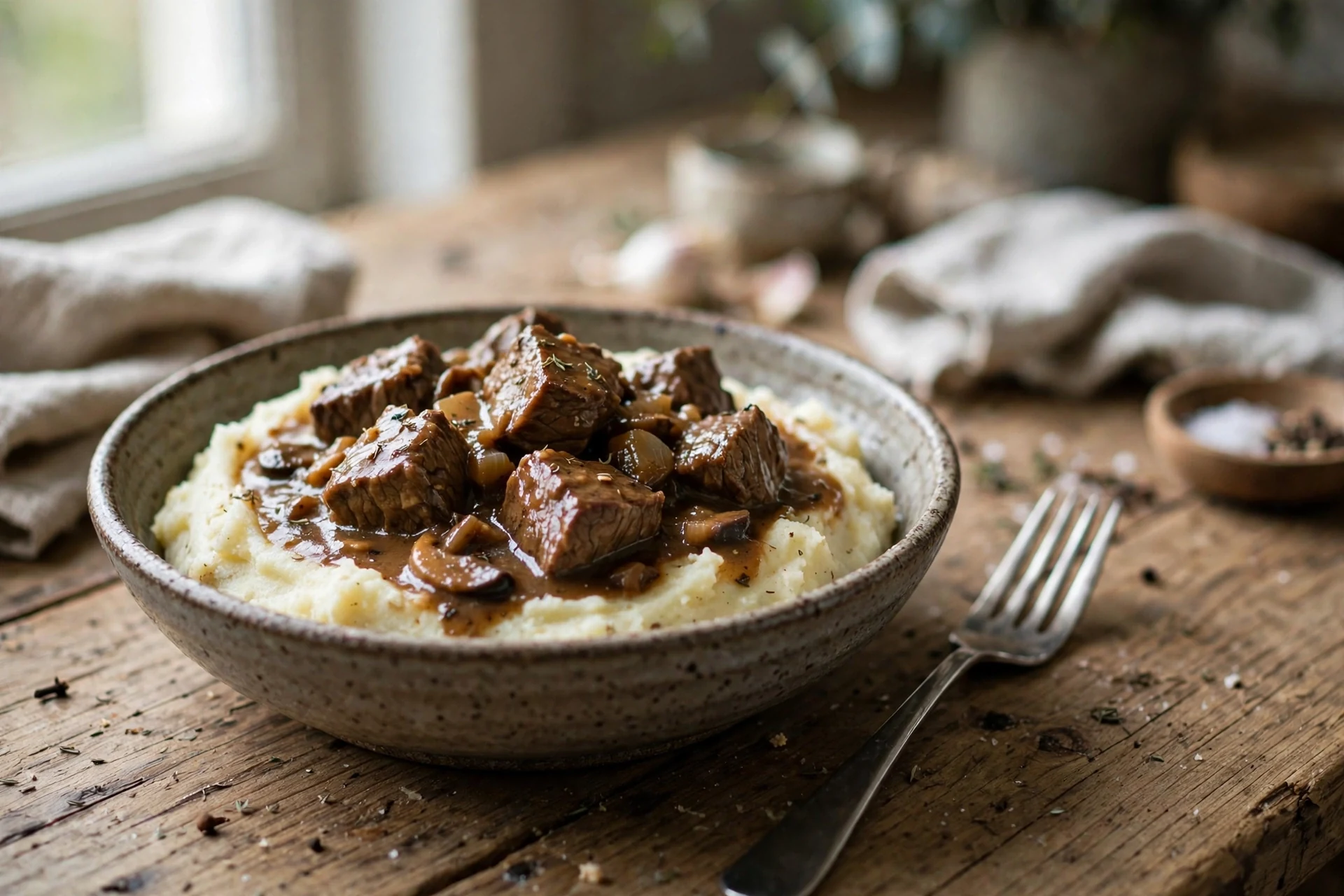
Slow Cooker Beef Tips and Gravy
Ingredients
Method
- Pat the beef cubes dry with paper towels. Toss them with the flour, salt, pepper, and garlic powder until evenly coated, shaking off any excess.
- Heat the oil in a large skillet over medium-high heat until shimmering. Sear the beef in batches, about 2 minutes per side, until deeply browned. Do not crowd the pan. Transfer to the slow cooker.
- In the same skillet, saute the sliced onion for 3 to 4 minutes, scraping up the browned bits. Add to the slow cooker.
- Whisk together the beef broth, Worcestershire sauce, tomato paste, and thyme. Pour over the beef and onions.
- Cover and cook on LOW for 6 to 7 hours, until the beef is fork-tender. (HIGH for 3 to 4 hours works, but LOW gives the most tender result.)
- Transfer the beef to a serving dish and cover to keep warm. Whisk the cornstarch slurry into the hot cooking liquid, cover, and cook on HIGH for 10 to 15 minutes, until glossy and thickened.
- Taste the gravy and adjust salt and pepper. Return the beef to the gravy, spoon over mashed potatoes or egg noodles, and sprinkle with parsley.
Notes

Hi, I’m Josie Erin. At TheRecipeBites, I turn simple ingredients into flavorful bites that make every meal memorable.