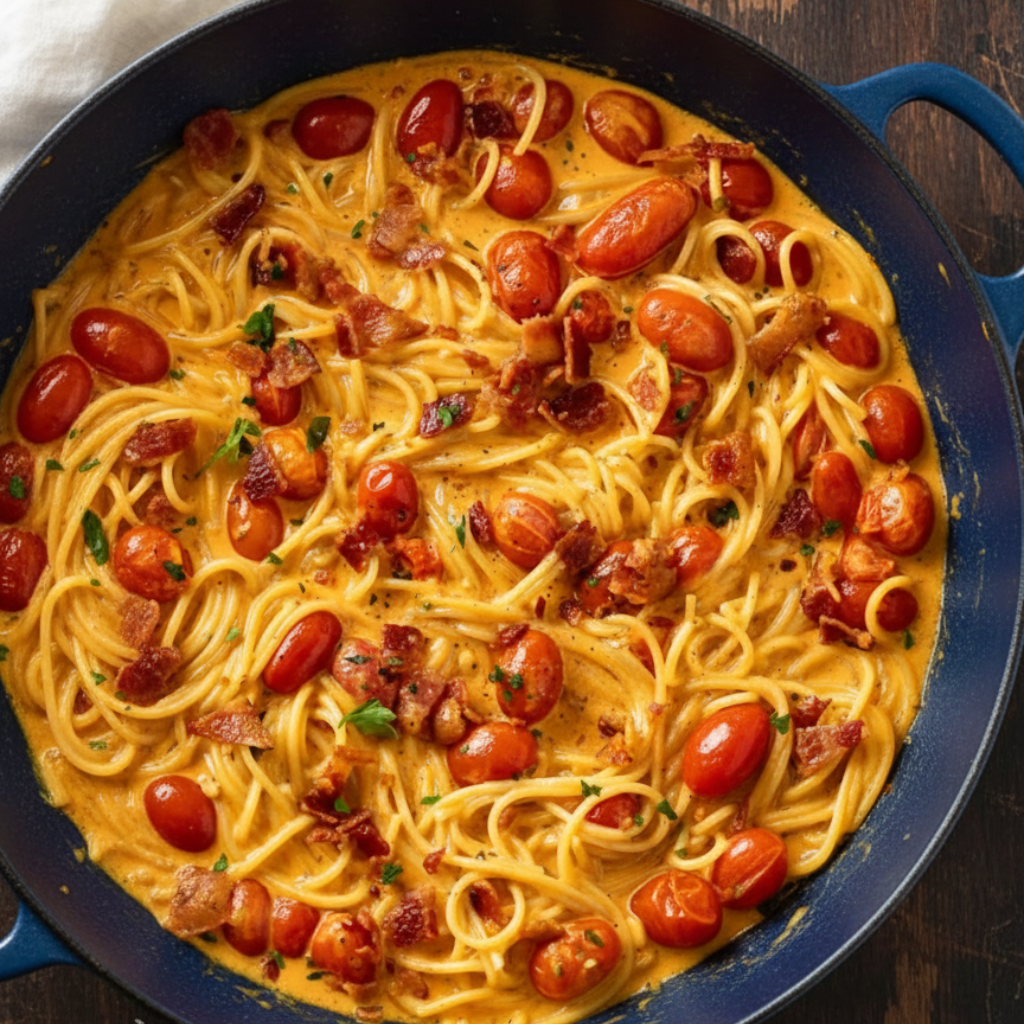
There’s something about the combination of crispy bacon and creamy pasta sauce that just works. This isn’t your average weeknight pasta – though it comes together quickly enough to qualify. The tomato cream sauce has depth, the bacon adds that smoky crunch, and the Parmesan brings everything together into something that honestly tastes like it came from a restaurant kitchen.
I’ve made this recipe more times than I can count, tweaking and adjusting until it hit that sweet spot where every element pulls its weight. The key is in the layering of flavors and getting the textures just right crispy bacon against silky sauce, tender pasta soaking up all that garlicky goodness.
What Makes This Bacon Pasta Different
Most bacon pasta recipes fall into one of two camps: either they’re heavy carbonaras with raw egg, or they’re basic cream sauces with bacon bits thrown in as an afterthought. This recipe sits somewhere in between, giving you the richness of a cream sauce but with the brightness of fresh tomatoes cutting through all that dairy.
The Cream Cheese Secret
The cream cheese is the secret weapon here. Room temperature cream cheese melts into the sauce and creates this velvety texture that’s hard to achieve with just heavy cream alone. Combined with freshly grated Parmesan, you get a sauce that clings to every piece of pasta without being gloppy or heavy.
Gathering Your Ingredients
The ingredient list is straightforward, but quality matters here. Since there aren’t many components, each one needs to shine.
The Protein
For the Bacon:
- 8 slices of thick-cut bacon
Your Pasta Choice
The Pasta:
- Half a pound of your preferred pasta shape (bowtie, shells, or spaghetti work beautifully)
The Sauce Components
Building the Sauce:
- 3 cloves of garlic, minced fine
- 2 cups of cherry tomatoes, halved
- 4 ounces of cream cheese, brought to room temperature
- 1 cup of heavy cream
- 1 cup of freshly grated Parmesan cheese
- Low-sodium chicken broth for deglazing
Flavor Enhancers
Seasoning Elements:
- Kosher salt
- Freshly cracked black pepper
- Dried basil
- Red pepper flakes (optional, for subtle heat)
- Fresh parsley for finishing
Understanding Your Ingredients
Let me walk you through why certain ingredients matter more than you might think.
Choosing the Right Bacon
The bacon needs to be proper thick-cut strips. Thin bacon crisps up too fast and can turn bitter. You want bacon that renders slowly, releasing all those flavorful drippings that become the foundation of your sauce. Don’t skimp and buy the cheapest package – this is where you invest.
Why Cherry Tomatoes Work Best
Cherry tomatoes bring a sweet-tart brightness that balances the richness. You could use diced canned tomatoes if that’s what you have, but fresh cherry tomatoes soften beautifully in the pan and release just enough juice to create this gorgeous base without making the sauce watery.
The Temperature of Cream Cheese Matters
Room temperature cream cheese is non-negotiable. Cold cream cheese won’t melt smoothly – you’ll end up with lumps floating in your sauce, and nobody wants that. Take it out of the fridge at least 30 minutes before you start cooking.
Fresh Parmesan Makes the Difference
Parmesan must be freshly grated from a block. The pre-shredded stuff in bags has anti-caking agents that prevent smooth melting. Grate it yourself, and you’ll see the difference immediately when it melts into the sauce like butter.
Getting Set Up
Before you turn on any burners, do yourself a favor and get organized. Mince that garlic. Halve those tomatoes. Measure out your cream and get that cream cheese sitting on the counter. Bring a large pot of salted water to boil for the pasta.
This recipe moves quickly once you start, so having everything within arm’s reach makes the difference between a relaxed cooking experience and a stressful scramble.
The Bacon Process
Start with a cold skillet – this is important. Place your bacon strips in the pan, then turn the heat to low. This slow rendering process is what gives you perfectly crispy bacon with all those flavorful drippings.
The Slow Rendering Technique
Low and slow is the mantra here. You’re not in a rush. Let the bacon sizzle gently, rendering its fat gradually. After about 10-12 minutes, you’ll have bacon that’s crispy on the edges but still has some chew, and a pan full of liquid gold – those bacon drippings.
Saving Those Drippings
Remove the bacon to a paper towel-lined plate. Don’t drain all those drippings. You need exactly 1 tablespoon of that rendered fat to stay in the pan. That’s your cooking medium for the garlic and the foundation of your sauce flavor.
Bacon Pasta Recipe
Ingredients
Equipment
Method
- Cook the bacon: Place bacon strips in a cold skillet and turn heat to low. Cook for 10-12 minutes, flipping occasionally, until crispy. Transfer to a paper towel-lined plate. Drain excess fat, leaving 1 tablespoon in the pan.
- Boil the pasta: While bacon cooks, bring a large pot of salted water to boil. Cook pasta until al dente (about 1 minute less than package directions). Reserve 1 cup pasta water before draining.
- Sauté the garlic: Return skillet with bacon fat to low heat. Add minced garlic and cook for 30 seconds, stirring constantly until fragrant and golden.
- Deglaze the pan: Add chicken broth to the pan, scraping up any browned bits from the bottom. Let bubble for 1 minute.
- Add tomatoes: Stir in halved cherry tomatoes, dried basil, salt, black pepper, and red pepper flakes if using. Cook for 4-5 minutes until tomatoes soften and start to break down.
- Create the cream base: Pour in heavy cream and stir to combine. Bring to a gentle simmer, then reduce heat to low.
- Incorporate cream cheese: Add cream cheese in small chunks. Stir continuously until completely melted and sauce is smooth, about 2-3 minutes.
- Add Parmesan: Gradually add grated Parmesan cheese, stirring between each addition until fully melted and sauce is creamy.
- Combine pasta and sauce: Add drained pasta directly to the sauce. Use tongs to toss until every piece is coated. If sauce is too thick, add reserved pasta water 2 tablespoons at a time until desired consistency.
- Finish the dish: Crumble or chop the cooked bacon. Toss most of it into the pasta, reserving some for garnish. Sprinkle with fresh chopped parsley and serve immediately.
Notes
Building Flavor Layers
Getting the Garlic Right
With your pan still over low heat and that tablespoon of bacon fat shimmering, add your minced garlic. This is where patience pays off again. You want the garlic to turn golden and fragrant, not brown and bitter. Stir it constantly for about 30 seconds.
Deglazing for Maximum Flavor
The moment your garlic starts to smell incredible, splash in some chicken broth. This deglazes the pan, lifting all those browned bits stuck to the bottom – that’s pure flavor you don’t want to waste. Let it bubble and reduce slightly.
Adding the Tomatoes
Now add your halved cherry tomatoes. They’ll start to soften and release their juices within a few minutes. Season with salt, pepper, dried basil, and a pinch of red pepper flakes if you want subtle warmth. The tomatoes should break down slightly but still hold some shape.
Creating the Cream Sauce
Adding the Cream Base
Once your tomatoes have softened and started to collapse (about 4-5 minutes), it’s time to build that creamy element. Pour in your heavy cream and stir everything together. The cream will pick up the tomato color and all those garlic flavors.
Incorporating the Cream Cheese
Bring this mixture to a gentle simmer – not a rolling boil. Once it’s bubbling softly, reduce the heat to low. This is when you add your room temperature cream cheese in small chunks. Stir continuously as it melts into the sauce, creating that silky texture.
Melting in the Parmesan
The sauce will start to thicken as the cream cheese incorporates. Once it’s smooth and no lumps remain, start adding your freshly grated Parmesan. Don’t dump it all in at once. Add it gradually, stirring between additions, letting each handful melt completely before adding more.
Timing the Pasta
Cooking to Al Dente
While you’re building your sauce, your pasta should be cooking in that pot of heavily salted boiling water. Cook it just until al dente – actually, pull it about a minute before the package suggests. The pasta will continue cooking when you toss it in the hot sauce, and you want it to absorb some of that creamy goodness without turning mushy.
Don’t Forget the Pasta Water
Reserve a cup of pasta cooking water before you drain. That starchy water is your insurance policy if the sauce gets too thick.
Bringing Everything Together
The Tossing Technique
Drain your pasta and add it directly to the pan with your cream sauce. This is where the magic happens. Use tongs to toss the pasta in the sauce, coating every piece. The pasta will absorb some of the sauce as you toss, and the sauce will cling to all those nooks and crannies.
Adjusting the Consistency
If the sauce seems too thick or the pasta looks dry, add splashes of that reserved pasta water. The starch in the water helps the sauce adhere to the pasta even better while loosening the consistency.
The sauce will continue to thicken as it sits, which is normal. Don’t panic if it looks a bit looser in the pan than you’d like – give it a minute or two off the heat, and it’ll set up perfectly.
The Final Touches
Crumble or chop that crispy bacon you made earlier. Toss most of it into the pasta, saving some for garnishing the top. Fresh chopped parsley adds a pop of color and a bright, fresh note that cuts through the richness.
Serve this immediately while the sauce is at its silky best. As it cools, the sauce firms up considerably, though it’s still delicious – just different in texture.
Customization Options
This recipe is incredibly flexible once you understand the basic technique.
Choosing Your Pasta Shape
Pasta shapes matter more than you might think. Bowtie pasta (farfalle) has all those ridges and folds that grab onto the sauce beautifully. Medium shells create little pockets that fill with cream. Spaghetti or thin spaghetti gives you that classic twirl-on-your-fork experience. Penne works if that’s what you have, though smooth penne doesn’t hold sauce quite as well as the ridged version.
Ingredient Swaps That Work
If cherry tomatoes aren’t available, a 14-ounce can of diced tomatoes, drained, works in a pinch. The texture is different – more uniform and firmer – but the flavor is still good.
Some people prefer half and half instead of heavy cream for a lighter sauce. If you go this route, warm the half and half in the microwave for 30-40 seconds before adding it to the pan. Cold half and half can curdle when it hits the hot pan.
Common Pitfalls and How to Avoid Them
The Cold Cream Cheese Mistake
The biggest mistake people make is using cold cream cheese. It simply won’t incorporate smoothly. Room temperature is essential.
Pre-Grated Cheese Problems
Second most common issue is using pre-grated Parmesan from a container. Those anti-caking additives prevent it from melting into a smooth sauce. You’ll get a grainy, separated texture instead of creamy.
Bacon Timing Issues
Overcooking the bacon is another trap. You want it crispy, yes, but if it gets too dark, it turns bitter and chewy in an unpleasant way. Low heat and patience give you the best results.
The Pasta Water Rule
Don’t skip reserving pasta water. I’ve made this mistake myself – you drain the pasta, forget to save some water, and then your sauce is too thick and you have no way to adjust it properly. Always grab that cup of water before draining.
Storing and Reheating
Refrigerator Storage
This pasta keeps in an airtight container in the refrigerator for up to three days. The sauce will thicken considerably as it cools and sits, which is normal.
How to Reheat Properly
To reheat, add a splash of milk or cream in a pan over low heat. Stir gently as it warms through. The microwave works too, but add a bit of liquid and use 50% power to avoid the sauce separating.
Freezing Guidelines
You can freeze this for up to three months, though the texture of the cream sauce changes slightly upon thawing. It’s still perfectly edible, just not quite as silky as fresh.
Making It Your Own
Add-Ins and Variations
Once you’ve made this recipe as written, there are endless directions you can take it. Add some wilted spinach for color and nutrition. Toss in sun-dried tomatoes for extra tomato intensity. Sautéed mushrooms would be incredible here. Some people add a splash of white wine when deglazing instead of just broth.
Lighter Alternatives
For a lighter version, you could use turkey bacon, though you’ll sacrifice some of that smoky depth. The sauce technique remains the same regardless.
Regional Twists
If you want this to lean more Italian, add fresh basil instead of dried, and finish with a drizzle of good olive oil. For a Southern take, add a dash of hot sauce to the cream sauce.
Why This Recipe Works
The Balance of Richness and Brightness
The success of this dish comes down to balancing richness with brightness. The bacon and cream provide that satisfying, indulgent quality, while the tomatoes and garlic keep it from feeling too heavy. The Parmesan adds both creaminess and that nutty, salty depth that makes you want another bite.
Layered Flavor Development
The technique of building flavors in layers – bacon first, then garlic, then tomatoes, then cream – means each element contributes to the final taste without any single ingredient overpowering the others.
Weeknight-Friendly Elegance
And perhaps most importantly, this recipe respects your time. From start to finish, you’re looking at about 30 minutes of active cooking. That’s weeknight-friendly while still delivering something that feels special enough for company.
The Pasta as Canvas
The pasta itself becomes the vehicle for all these carefully built flavors, absorbing the sauce and carrying a bit of everything in each bite. That’s what good pasta should do – not just exist alongside the sauce, but become part of it.
This is the kind of recipe that starts as a weeknight dinner solution and ends up in regular rotation because it’s just that satisfying to make and eat. Rich enough to feel like a treat, quick enough to make on a Tuesday, and forgiving enough that even if you’re not an experienced cook, you’ll end up with something genuinely delicious.

Hi, I’m Josie Erin. At TheRecipeBites, I turn simple, everyday ingredients into flavorful bites that make every meal memorable. I believe great food doesn’t have to be complicated it just needs the right balance of flavor, creativity, and love. From quick weeknight dinners to sweet treats worth sharing, I’m here to help you cook with confidence and enjoy every bite.